
Daylight Saving Time (DST) has always been contentious. In the United States, the debate resurfaces almost as regularly as everyone shifts their clocks backwards in the fall and forward in the spring. Earlier this year, the U.S. House of Representatives even passed a bill called the “Sunshine Protection Act” to make DST permanent. However, the legislation hasn’t progressed much further since July, and we are mere days away from falling back.
That’s for the best, according to a team of biologists at the University of Washington, Seattle (UW). In a study published today in the journal Current Biology, researchers contend a permanent DST would needlessly endanger countless children around the country during their morning school commutes.
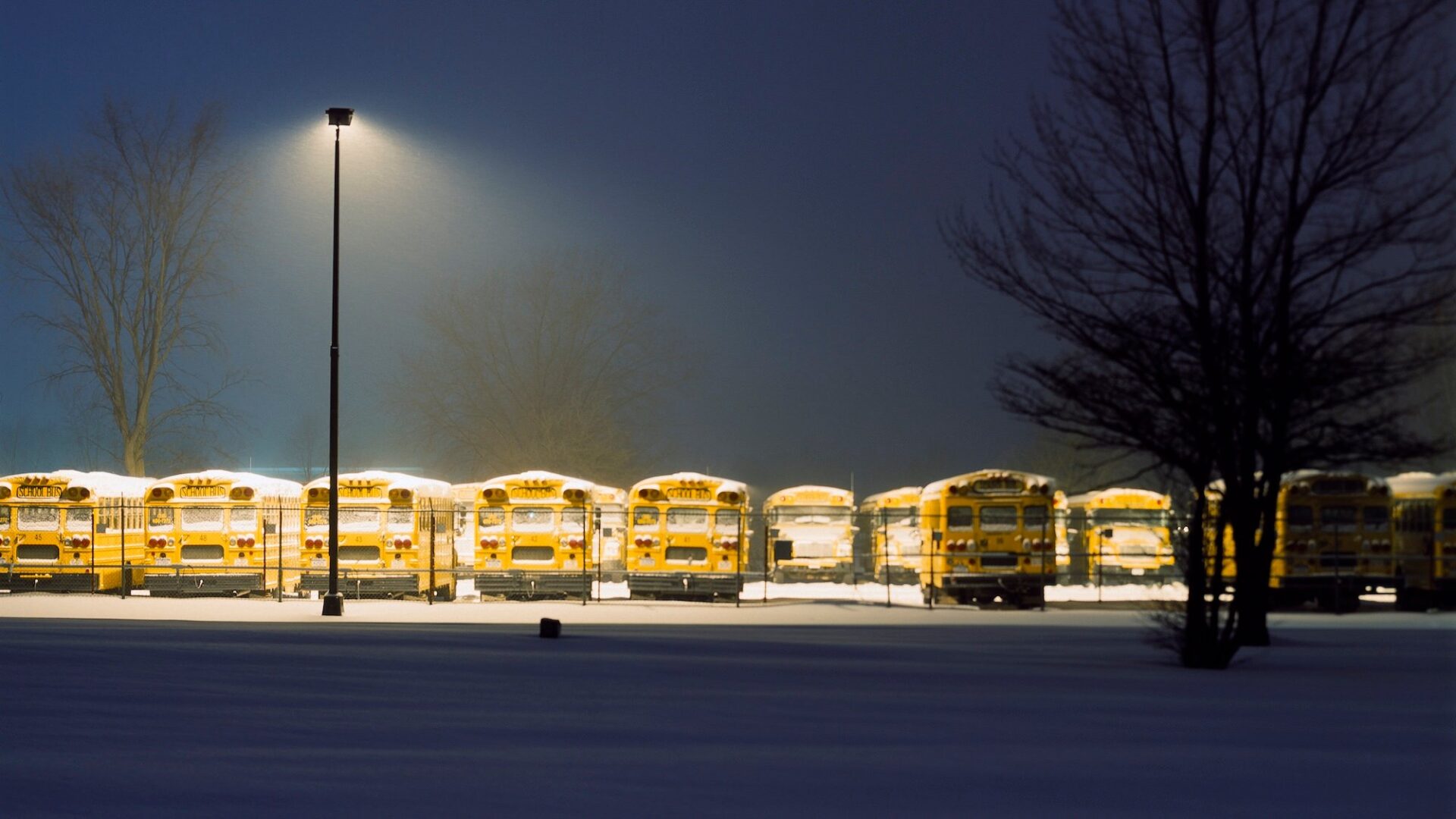
“Permanent DST would move the school day earlier relative to the sun without changing a single bell schedule, putting millions of children on streets and at bus stops in the dark for weeks or months every year,” said study co-author and UW chronobiologist Horacio de la Iglesia.
De la Iglesia and his colleagues explained that while most DST chatter centers on how much light is available during evening hours, it ignores the early morning consequences. Most children in the U.S. return home from school before sundown with or without DST, but a permanent shift could make predawn commutes a regular occurrence around the country. According to de la Iglesia’s team, authors of the Sunrise Protection Act didn’t factor in these issues before the school day when crafting their bill.
To investigate, researchers the team examined school start times in 14 states with a hypothetical permanent DST, then compared them to local sunrise times. They calculated roughly 356 million additional trips to school before sunrise. When expanded to the entire country, the authors estimate over two billion predawn school trips. From there, the study authors reviewed available traffic data to determine that dark mornings dramatically increase the chances of pedestrian collisions. Fatal instances involving individuals ages 5 to 18 are more likely during dark hours, too.
The ramifications aren’t concentrated in any single region of the country, either. Northern and southern states would all be affected, although Georgia would likely experience the most dark morning commutes in the nation. That said, permanent DST would negatively affect more children based on socio-economic lines.
“The burden of permanent DST is likely greatest for children who walk, wait for buses, or arrive early for school breakfast programs, which disproportionately serve lower-income families,” added UW biologist and study co-author Guadalupe Rodríguez Ferrante.
If the U.S. ever did pass a similar law, Ferrante and de la Iglesia argued that it should be for a permanent standard time (ST). That switch would reduce the current number of dark school mornings by half. A permanent ST is also more aligned with the biological and social clocks of children and adolescents.
“No clock policy adds a single minute of daylight. It only changes when that daylight is available,” said de la Iglesia. “Permanent DST moves an hour of light out of the morning, when children travel to school, and into the evening.”
But if all that somehow weren’t enough, the study’s authors contend that historical precedent should ensure the “Sunshine Protection Act” never sees the light of day, so to speak.
“The U.S. has tried this before,” said Ferrante, referring to a year-round DST that went into effect in January 1974.
The shift didn’t even last a year—in large part due to worries about children heading to school.
The post Permanent Daylight Saving Time is dangerous for kids, new research says appeared first on Popular Science.
Permanent Daylight Saving Time is dangerous for kids, new research says
