
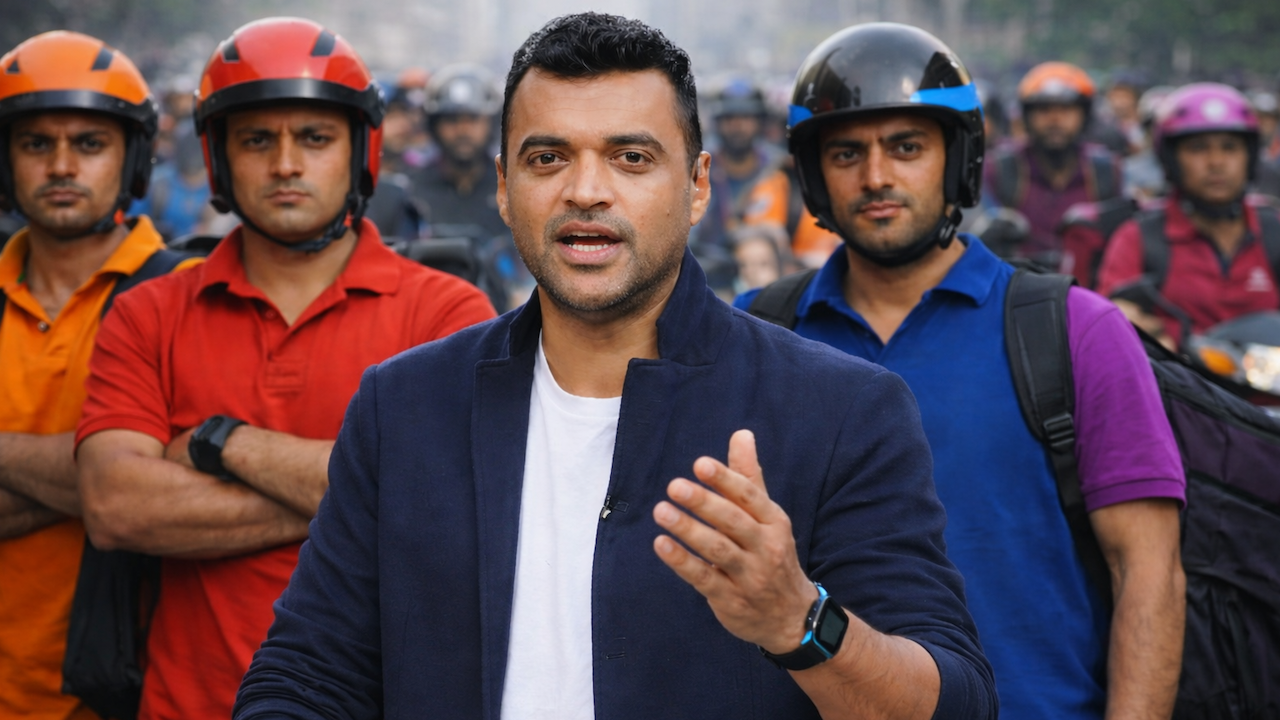
Zomato CEO Deepinder Goyal’s defence of the company’s gig work model has triggered a sharp response from the Telangana Gig and Platform Workers Association (TGPWA), which has called current working conditions for delivery partners “not decent work.”
The union’s criticism has intensified the wider debate over pay, benefits and job security in India’s fast-growing quick-commerce and food delivery sector, said a report by the Business Standard.
What Zomato CEO Said
In a post on X, Goyal outlined a five-point explanation of how delivery partners earn on Zomato and Blinkit. He said:
Average hourly earnings in 2025 stood at ₹102 per hour, excluding tips
Earnings rose 10.9% year-on-year
Delivery partners can choose their working hours freely
Riders keep 100% of customer tips
The 10-minute delivery promise does not push workers into unsafe driving
He also highlighted welfare measures such as insurance cover and pension-related support.
Union Challenges the Earnings Math
The TGPWA disputed these claims, arguing that headline earnings figures do not reflect real take-home pay. According to the union, once fuel costs, vehicle maintenance and other expenses are deducted, net earnings fall to about ₹81 per hour.
At that rate, a delivery partner working 10 hours a day for 26 days a month would earn roughly ₹21,000, the union said.
More critically, the association pointed out that gig workers do not receive:
Paid leave
Social security coverage
Guaranteed accident insurance
“These conditions cannot be described as decent work,” the union said.
Tipping and Benefits Under Scrutiny
The union also questioned how meaningful tips are as a source of extra income. It claimed that only about 5% of Zomato orders receive tips, limiting the benefit riders actually gain from them.
This, it argued, weakens the claim that tips significantly boost overall earnings.
Growing Protests and Demands
Worker groups across the country have been protesting platform work models, particularly those linked to rapid delivery timelines. Unions such as the Gig & Platform Services Workers Union (GIPSWU) have backed strikes and online campaigns demanding:
Formal minimum wage rates
Statutory benefits
Clearer safety standards
These concerns have been echoed in recent reports highlighting unrest among last-mile delivery workers.
The Other Side of the Debate
Supporters of Goyal’s stance argue that gig work is designed to offer flexibility and supplemental income rather than traditional full-time employment. They say many workers value autonomy over fixed schedules and benefits, and some industry leaders have publicly backed Zomato’s model.
Call for Transparency Grows
As the debate sharpens, calls are growing for platforms to publish more detailed and transparent earnings data. Critics say this would allow a fair comparison between gig work and formal-sector jobs, and help policymakers assess whether current protections are adequate.
For now, the clash highlights a central question facing India’s gig economy: can flexibility and fairness truly coexist without stronger labour safeguards?
