
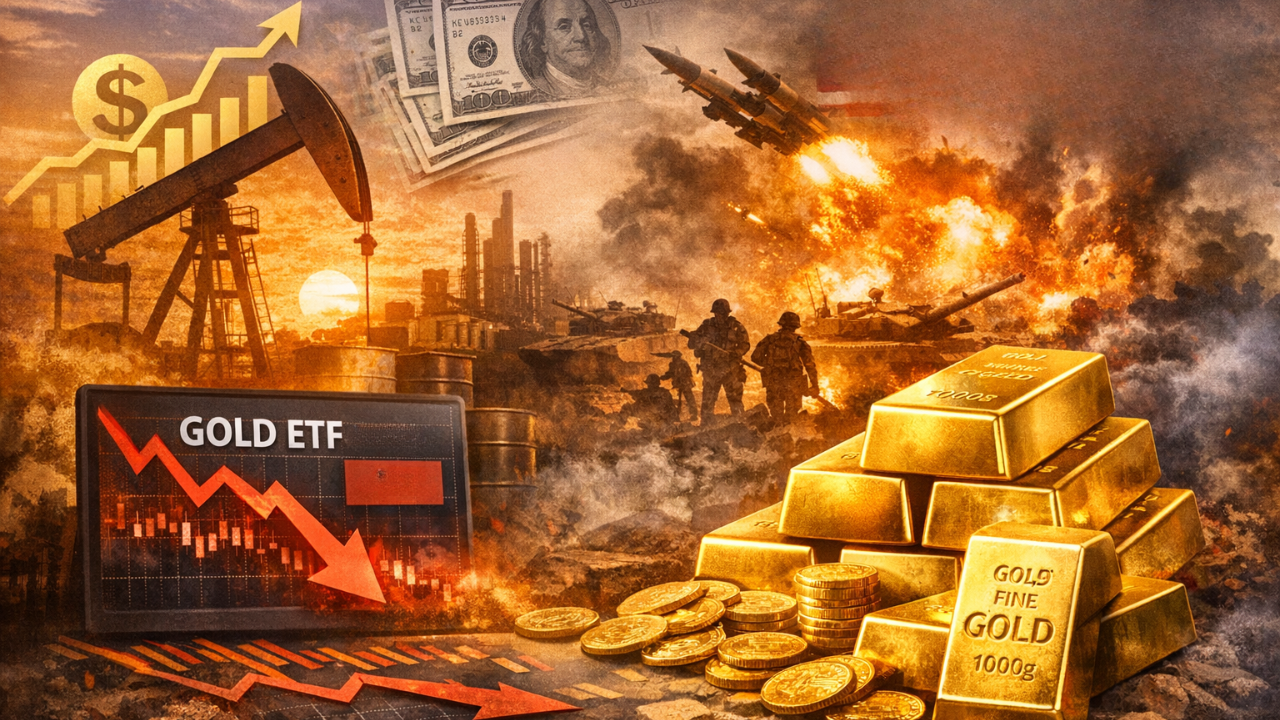
At the start of 2026, gold appeared perfectly positioned to shine, reaching an all-time high in January. Expectations of stable inflation, a potential rate-cut cycle by the US Federal Reserve, and a relatively calm economic outlook made it a preferred investment option against uncertainty. Additionally, investors widely viewed the metal as a reliable shield against geopolitical risks and currency fluctuations. However, as tensions between the US-Israel bloc and Iran escalated into a full-scale conflict in West Asia, gold failed to respond in line with its traditional safe-haven role. Instead of rallying, it has weakened since the start of the conflict.
India’s largest gold ETF, Nippon India ETF Gold BeES, dropped sharply from Rs 131.60 on 27 February 2026 to Rs 110.72 by 23 March, marking a decline of nearly 16 per cent in less than a month. Although it has since rebounded by 11.5 per cent, it still trades 15.7 per cent below its recent high as of 10 April 2026.
Oil Surge And Rate Shift Disrupt Gold’s Momentum
One of the primary reasons behind gold’s muted performance has been the sharp rise in crude oil prices. The conflict triggered a surge in Brent crude, which reignited inflation concerns and forced markets to reassess interest rate expectations. Rising inflation has pushed US Treasury yields higher, increasing the opportunity cost of holding gold, which does not offer interest or dividends. At the same time, a stronger US dollar, supported by higher yields, has added further pressure.
“As crude prices rally and support the dollar, gold tends to come under pressure given its inverse relationship with the dollar,” said Tapan Patel, fund manager-commodities at Tata Asset Management, in a Mint report.
“At the start of the year, markets were expecting two rate cuts from the US Fed in 2026. By mid-March, that view had fully reversed — the conversation had shifted to a prolonged pause, and even to the possibility of a rate hike,” said Manav Modi, analyst, precious metals research at Motilal Oswal Financial Services, as per the report.
Another key factor has been a shift in central bank behaviour. Rising crude prices have increased import bills for many countries, putting pressure on foreign exchange reserves and currencies. In response, some central banks have either reduced their gold purchases or sold reserves to stabilise their economies.
“Central bank demand, which had been very strong last year, dialled back in February and March. They are still net buyers, but the pace of buying has reduced. Large buyers like Russia and Turkey either moderated or turned sellers — partly to support their own currencies amid the war,” added Modi.
“Major energy-importing economies faced a sharp rise in crude import bills, which placed pressure on foreign exchange reserves and contributed to a temporary moderation in demand. The broader structural appetite for gold diversification remains intact — net purchases are continuing, albeit at a more measured rate,” explained Chirag Mehta, chief investment officer at Quantum AMC, in the report.
The Safe-Haven Irony Explained
Gold’s behaviour in the current crisis highlights a key shift. While it is traditionally seen as a safe asset during turmoil, its performance can be influenced by competing macroeconomic forces. “On one hand, you are seeing safe-haven buying. But on the other hand, the pressure from inflation and interest rates is greater — and that is what is keeping gold subdued right now,” said Modi.
“Gold liquidation is often triggered when systemic liquidity comes under stress. During the 2008 financial crisis, a similar crunch forced gold to retreat nearly 30 per cent, even as it was riding a multi-year bull run. But recovery followed shortly after,” said Mehta.
Unlike previous geopolitical events, this conflict is deeply tied to energy markets, amplifying inflationary pressures and complicating gold’s usual response.
What Lies Ahead For Gold?
In the near term, analysts expect gold to move sideways as markets digest ongoing developments. “We will have to wait and watch. Gold may remain in a consolidation phase for the short-term,” said Patel of Tata Asset Management.
Over the longer horizon, the outlook remains constructive. Factors such as continued central bank purchases, potential rate cuts, and global political uncertainty could support prices later in the year.
“The broader structural appetite for gold diversification remains intact. According to the World Gold Council, recent trends indicate a broadening of the institutional buyer base, with new central banks entering the market even as some large buyers moderate the pace of accumulation. The trajectory into 2026 still points toward continued net purchases, albeit at a more measured rate. Importantly, the recent correction does not signal a structural reversal. The fundamental drivers that lifted gold from around $3,000 to above $5,500 per ounce over the past cycle remain largely unchanged,” said Mehta.
Experts recommend maintaining a balanced allocation to gold within investment portfolios. A 10–15 per cent exposure remains reasonable, with investors advised to adjust holdings gradually rather than making abrupt moves.
(Disclaimer: This article is meant solely for informational and educational purposes. The views and opinions expressed are those of individual analysts or brokerage firms and do not reflect the stance of Times Now. Readers are advised to consult certified financial experts before making any investment decisions.)
