
The Tata Trusts feud and its twists and turns persist, with the latest one being Trustees Venu Srinivasan and Vijay Singh detailing a response to Darius Khambata’s letter and questioning his position on Tata Sons’ listing, governance and the reappointment of Chairman N Chandrasekaran.
In a letter dated November 11, 2026, the two Trustees said Khambata’s account of the developments was “incomplete in several material respects”, while maintaining that they did not question his sincerity.
On the contentious listing issue, Srinivasan and Singh rejected the argument that listing Tata Sons would threaten the Tata model. “An institution’s character is preserved by the quality of its governance and accountability, not by its listing status,” they said, citing listed Tata companies such as TCS, Tata Steel, Tata Power and Tata Motors.
They also questioned the rationale for not favouring a listing of Tata Sons, asking whether the position stemmed from concerns about preserving the Tata model or considerations relating to control of the company. “Is the real concern the preservation of the Tata model, or the preservation of control over Tata Sons by the present leadership of Tata Trusts?”, they asked.
Tata Trusts Chairman Noel Tata opposed the Tata Sons board’s September 17, 2026 resolution to reappoint N Chandrasekaran for a further five-year term, maintaining that the decision was invalid under the company’s Articles of Association. Trustee Darius Khambata also questioned the circumstances surrounding the reappointment and raised concerns over the board’s decision. Both have argued against a public listing of Tata Sons, citing concerns about its potential implications for the Tata Group’s governance structure and the Trusts’ role in safeguarding their long-term interests.
Venu Srinivasan and Vijay Singh defended the Tata Sons board’s resolution to reappoint N Chandrasekaran, while reiterating that the company must comply with applicable regulatory requirements, including the RBI’s listing framework.
On the listing debate, the two Trustees rejected Darius Khambata’s characterisation of a public listing as an existential threat to the Tata model. Citing examples of companies such as Novo Nordisk, Hershey, Lundbeck and Demant, which are listed and anchored by foundations or trusts, they argued that listing need not come at the cost of institutional identity.
Closer home, they pointed to TCS, which is listed and controlled by Tata Sons, to support their argument. “In our view, an institution’s character is preserved by the quality of its governance and accountability, not by its listing status,” the letter stated.
They also invoked the need to respect regulatory institutions, saying, “a commitment to national service must hold when the regulator’s decision is unwelcome.”
In a pointed question to Khambata, Srinivasan and Singh asked whether the concern was preserving the Tata model or “the preservation of control over Tata Sons by the present leadership of Tata Trusts?”
In their concluding remarks, Venu Srinivasan and Vijay Singh said that, in their view, the real threat to the Tata model was not the listing of Tata Sons but “the weakening of collective governance, the concentration of authority in a few individuals, and the erosion of the institutional independence that Ratan Tata spent a lifetime building.”
Invoking Ratan Tata’s words that “the institution is always bigger than the individual” and “duties are owed to institutions, not to individuals”, the two Trustees said they agreed with the principle “without reservation”. They argued that “no single Trustee, and no single Chairman of the Trusts, should override a unanimous collective decision, make the leadership of Tata Sons contingent on a change of position, or leave India’s most consequential Group without settled leadership for seven months.”
Defending the Tata Sons board’s September 17 decision, they stated, “the Board acted on 17 September because the institution is bigger than the individual.” In a pointed closing remark addressed to Khambata, they added, “we share your view-Darius, that no amount of spin-doctoring can mask what has happened, and that this applies to all concerned.”
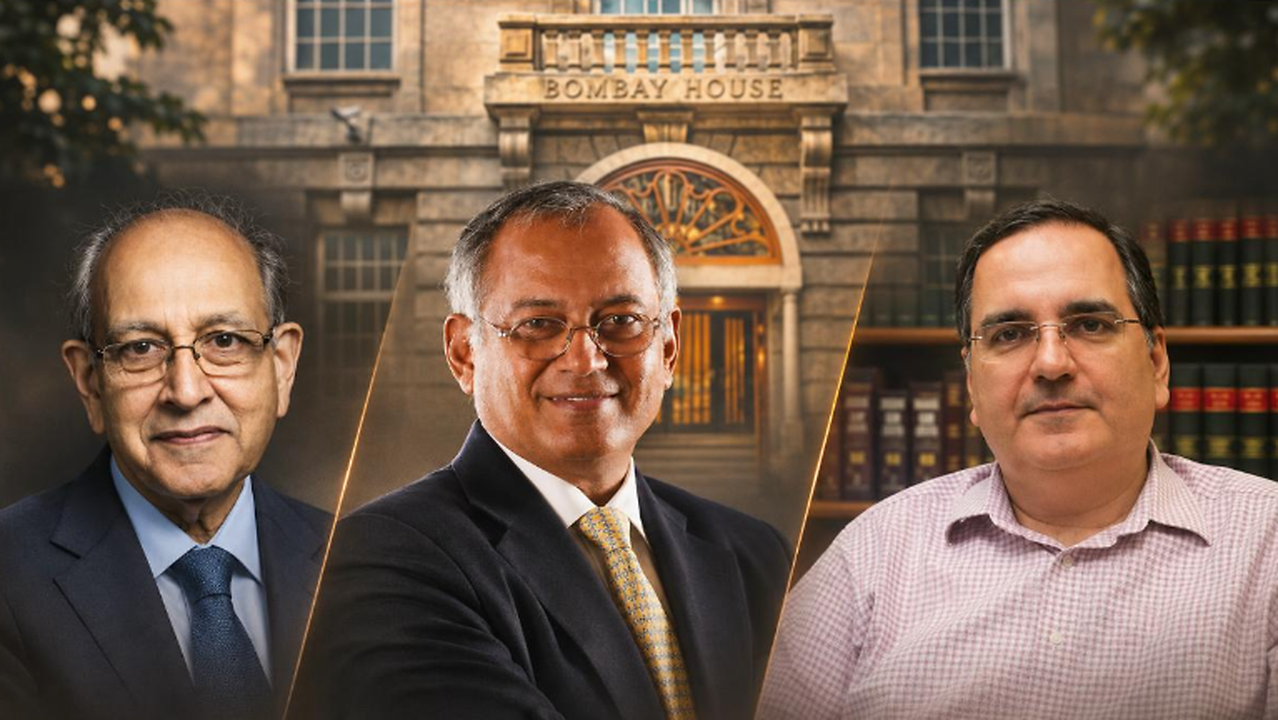
Tata Trusts Feud: Venu Srinivasan, Vijay Singh Respond To Darius Khambata, Raise Questions Over His Stand
