
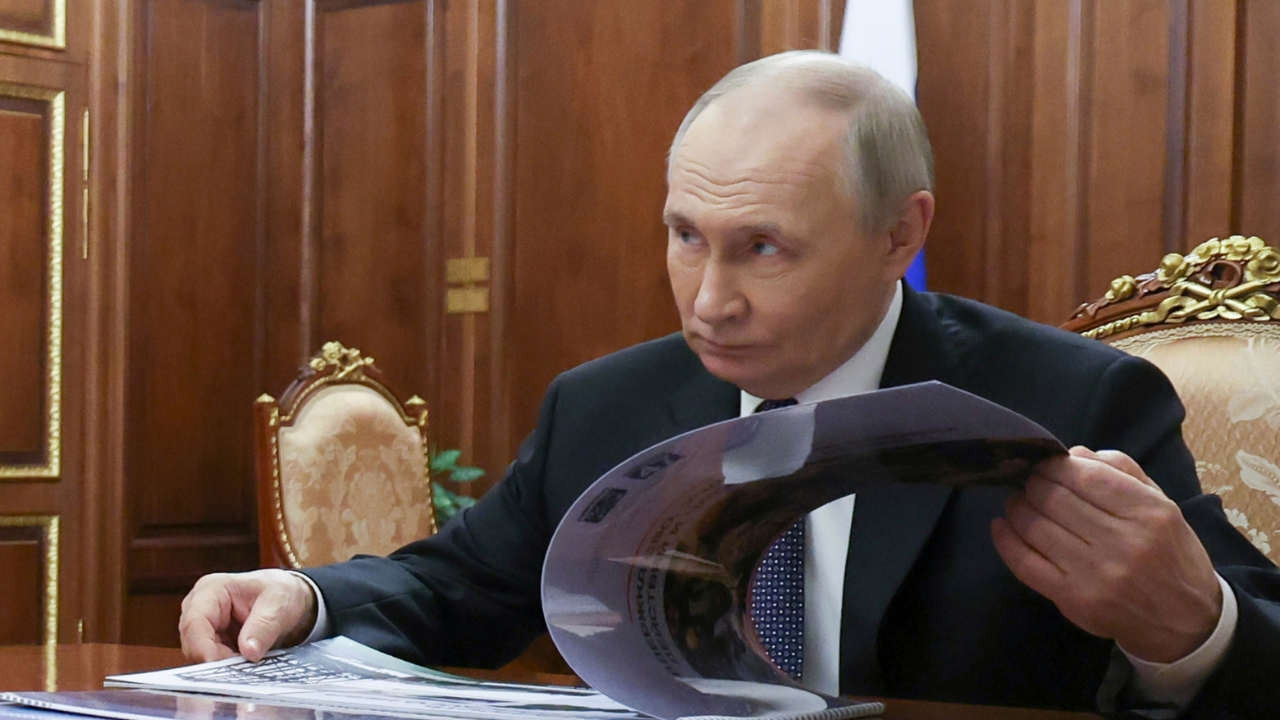
Russia’s earnings have increased manifold due to the energy sector as the ongoing war between Iran has resulted in the creation of chaos in the world’s oil market, thus providing the country with a golden opportunity to benefit from the high prices of crude oil. Vladimir Putin, the President of Russia, is reportedly earning a windfall of nearly $760 million on a daily basis through the sale of crude oil and gas. This example, thus, proves how the scenario in the world can change in no time due to the conflicts in any particular region.
Recent analysis from the Kyiv School of Economics Institute paints a striking picture. Russia’s monthly earnings from energy could almost double, jumping from roughly $12 billion to as much as $24 billion in the current month. The main drivers are skyrocketing crude oil prices combined with a temporary loosening of sanctions pressure from the United States under President Donald Trump. That easing has made it easier and less risky for buyers to purchase Russian oil that was previously harder to move, leading to stronger demand and smoother shipments.
Looking ahead, even if the conflict in the Middle East calms down relatively soon, Russia’s total oil and gas revenues for the full year are now expected to hit around $218.5 billion. That figure represents about 63 percent more than what was forecasted before the latest disruptions. Should the fighting drag on for several months, the windfall could grow massively, potentially reaching $386.5 billion. These numbers underline just how big the financial boost could become for the Kremlin.
READ MORE: Hormuz Toll Shock: Iran Moves to Charge Ships for Safe Passage
The heart of the surge lies in the major disruption to oil movements through the Strait of Hormuz, a vital narrow waterway that normally carries a huge share of the world’s daily oil supply. With shipping heavily affected, global supplies have tightened fast. Brent crude, the key international benchmark, has climbed sharply by around 38 percent, pushing toward $100 per barrel or more during volatile periods. Russian oil grades have performed even better, with prices rising nearly 72 percent as buyers scramble for available barrels and the usual discounts shrink.For a long time, sanctions forced Russia to sell its crude at steep discounts to major customers like India and China just to keep the oil moving. Now the tables have turned. Market conditions allow Moscow to charge prices much closer to global benchmarks, which greatly improves profit margins on every barrel exported. Russia’s Urals blend, for instance, no longer needs to be offered at $20 or $25 below Brent as it sometimes was in recent years. This change alone adds substantial extra revenue without any increase in production volume.
India is one of the countries that has stepped up its imports of Russian oil during this time of uncertainty. India is seeking secure and reliable energy supplies in a tighter market. China has also done the same by stepping up its imports to make up for the shortfall from its traditional sources in the Middle East. Both countries are demonstrating the ability of energy-hungry countries to react to a threat to energy supplies. China and India have put their energy needs before other interests. The Strait of Hormuz is normally used for one-fifth of the entire oil and liquefied natural gas trade.When tanker traffic there slows or stops, the effects spread far and wide. Shipping insurance costs jump, alternative routes take longer and cost more, and buyers everywhere hunt for replacement volumes. Russian oil fills part of that gap, which explains why demand for it has strengthened even while Western sanctions remain officially in place.During a recent meeting at the Kremlin, Putin directly told leaders of Russia’s big energy companies to use the extra money wisely by paying down debts owed to domestic banks.
He called this a responsible step, which will help the sector over the long term. Firms like Rosneft and Gazprom have had high levels of debt over the past few years due to sanctions, revenues, and the cost of supporting the rest of the economy. By clearing some of this debt, these firms may be able to fare better when prices eventually return to normal.
This revenue jump arrives after a tough stretch for Russia’s energy budget.In the early part of 2026, prior to the Iran conflict escalation, the revenues from oil and gas had been decreasing due to the softening of global oil prices, the strengthening of the ruble, and the sanctions. Some months have not met government targets, putting pressure on the government finances, especially when military expenditure was still high. The price increase has suddenly turned things around, at least for the time being, injecting some much-needed money into the government treasury.
However, many analysts are cautioning that this may not be sustained. If the conflict subsides and oil tankers once again sail normally through the Strait of Hormuz, oil prices may dip once again.
A longer war might trigger other responses, such as other producers pumping more oil or governments tapping into emergency reserves. Inside Russia, higher revenues bring their own risks, including possible inflation, currency swings, and the challenge of balancing energy income with ongoing domestic and military needs.On a wider scale, the episode highlights how tightly linked the world’s energy system really is. Trouble in the Gulf creates unexpected opportunities for suppliers elsewhere, even for a country already involved in its own major conflict in Ukraine. Russia has shown it can redirect sales toward Asian markets and benefit from higher prices despite limited access to Europe. This resilience keeps its energy sector functioning as a key pillar of the economy.For countries like India, leaning more on Russian supplies during tight times reflects straightforward energy security thinking. When global demand stays strong and supplies feel uncertain, practical availability often matters more than politics in the short run.
Over time, such shifts could deepen economic ties between Russia and its Asian buyers.In the end, the turmoil sparked by the Iran conflict has delivered Russia a notable but probably temporary financial lift. Putin’s emphasis on using the money to cut debt rather than spend it all immediately suggests a desire to build some lasting benefit from the situation. As events unfold in the Middle East, global oil prices, trade patterns, and geopolitical balances will keep shifting. The next few weeks and months will reveal whether this surge becomes a solid foundation for Moscow’s finances or simply a short-lived boost born out of someone else’s crisis. Either way, it serves as a reminder of how fragile and interdependent energy markets can be in turbulent times.
