
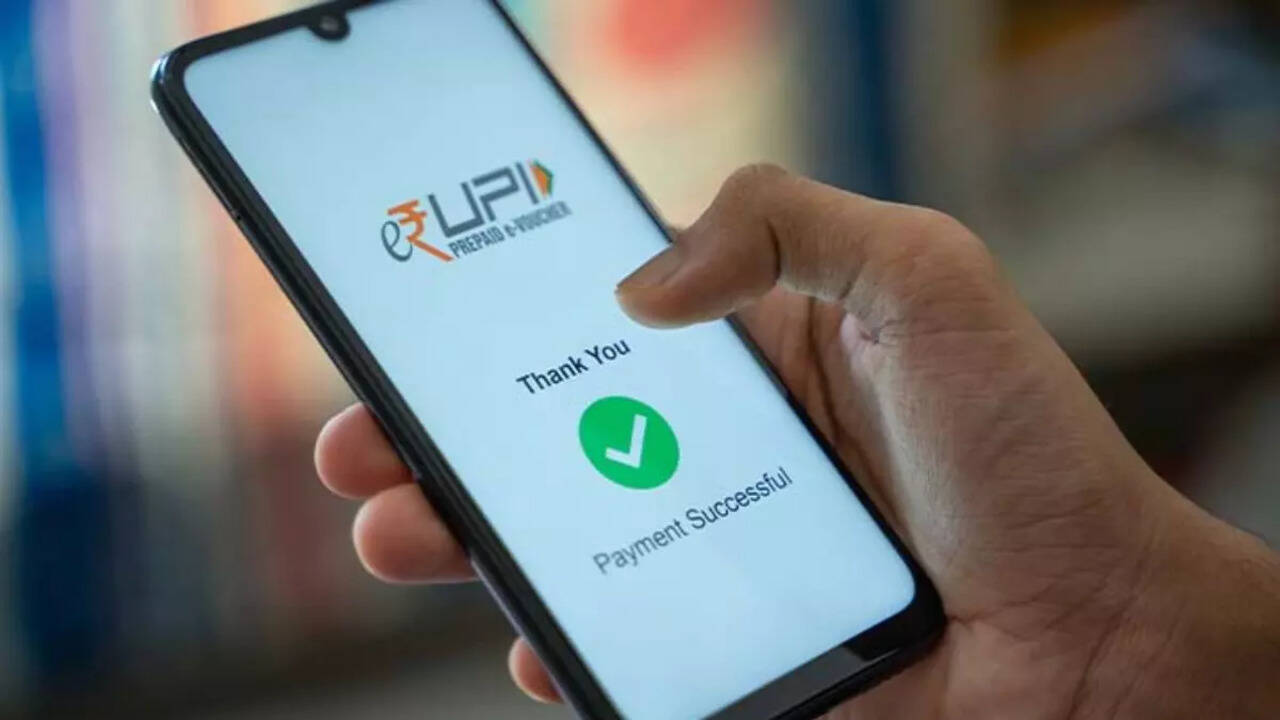
The government has formally reinforced the zero-charge framework for small-value digital payments, with Unified Payments Interface (UPI) transactions of up to Rs 2,000 protected from direct or indirect charges by banks and system providers. The Finance Ministry’s Department of Financial Services issued a Gazette notification on Monday, September 14, clarifying the electronic payment modes covered under the relevant provision of the Payment and Settlement Systems Act, 2007. The move is particularly important for UPI because most transactions by volume fall within the Rs 2,000 threshold.
The notification identifies two electronic payment modes — “Debit Card powered by RuPay” and “Unified Payments Interface (UPI) transactions up to Rs 2,000.”
The key provision prevents banks and system providers from levying charges on either side of a qualifying transaction.
The notification states, “No bank or system provider shall impose, whether directly or indirectly, any charge upon a person making or receiving a payment by using the electronic modes of payment specified in paragraph above.”
The government issued the notification “In exercise of the powers conferred by section 10 A of the Payment and Settlement Systems Act, 2007 (51 of 2007)”, using the powers provided under the legislation to specify the electronic payment modes covered by the provision.
Why Is The Rs 2,000 Limit Important?
The threshold matters because of the sheer number of UPI payments that fall within this range. Industry data indicates that approximately 96 per cent of UPI transactions by volume are valued between Rs 0 and Rs 2,000. In practical terms, this means the notified ceiling covers the vast majority of UPI transactions taking place by volume.
The same pattern is visible in person-to-merchant, or P2M, payments. Industry estimates suggest that only about 4 per cent of P2M transactions are above Rs 2,000. Consequently, nearly 96 per cent remain within the threshold covered by the government’s no-charge provision.
This makes the notification particularly relevant for everyday digital payments, where UPI is extensively used for smaller purchases and merchant transactions.
Does This Mean UPI Above Rs 2,000 Will Be Charged?
Not necessarily. One important point in understanding the notification is that it does not introduce a new Merchant Discount Rate (MDR) for UPI transactions above Rs 2,000.
Instead, the government’s notification specifically establishes that transactions up to Rs 2,000 cannot attract a direct or indirect charge from banks or system providers.
The notification therefore should not be interpreted as announcing a new fee structure for UPI payments exceeding Rs 2,000. It establishes the protected category rather than laying down a separate charging mechanism for higher-value UPI transactions.
What Does This Mean For Merchants And Users?
For users, the most immediate takeaway is that qualifying UPI payments up to Rs 2,000 continue to fall under an expressly protected zero-charge framework.
For merchants, the distinction between the protected threshold and transactions above it is important. The notification does not itself establish an MDR applicable to higher-value UPI transactions.
The government’s clarification comes against the backdrop of UPI’s enormous scale. Data from the National Payments Corporation of India (NPCI) shows that UPI handled more than 24,500 million transactions in August 2026, with the total value of payments reaching nearly Rs 29.82 lakh crore.
That volume underlines why even a rule covering transactions up to Rs 2,000 has a significant impact across India’s digital payments ecosystem.
The September 14 notification effectively draws a clear line around small-value UPI payments: transactions up to Rs 2,000 cannot be subjected to direct or indirect charges by banks or system providers.
With around 96 per cent of UPI transactions by volume estimated to fall within this band, the provision covers the overwhelming majority of payments. At the same time, the notification does not prescribe an MDR or introduce a new fee regime for UPI transactions above Rs 2,000.
