
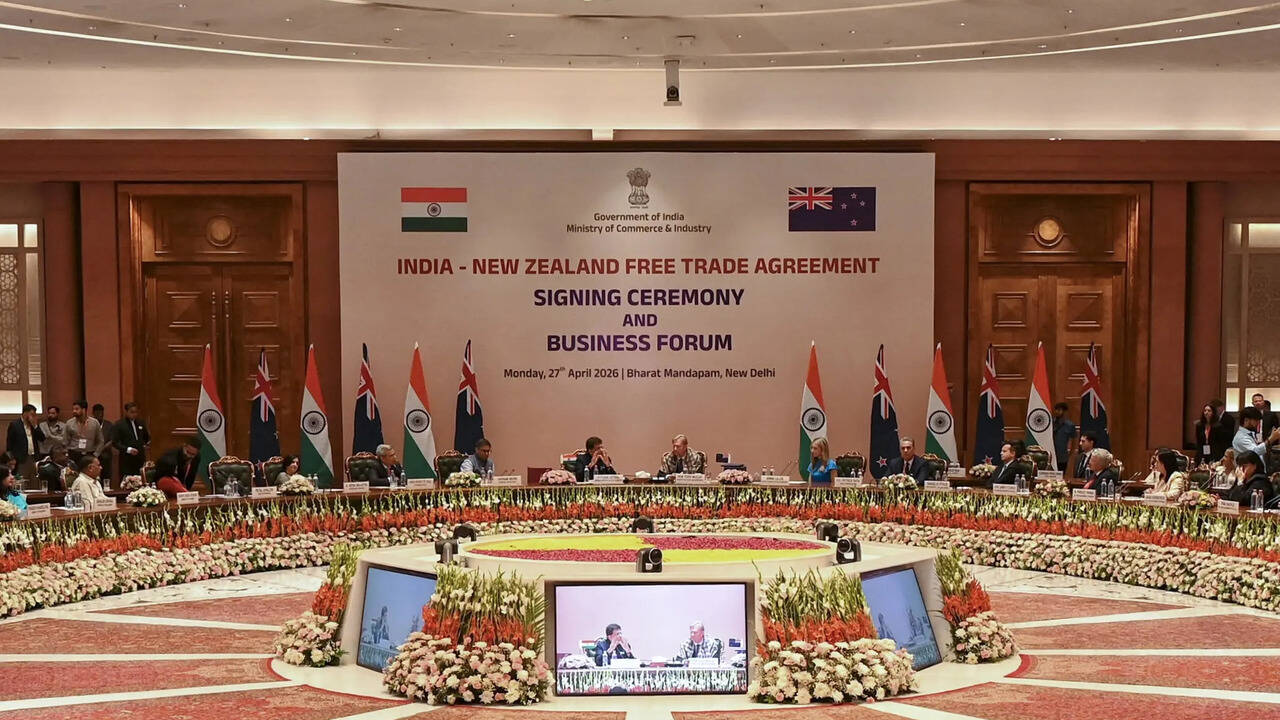
India and New Zealand on Monday inked a ‘once-in-a-generation’ Free Trade Agreement. The pact will be implemented by the end of this year since it requires approval from the New Zealand Parliament. The pact was signed by Union Commerce Minister Piyush Goyal and New Zealand Trade and Investment Minister Todd McClay. Lauding the trade deal, Prime Minister Narendra Modi said that the pact will greatly benefit farmers, youth, women, MSMEs, artisans, startups, students, and innovators. Piyush Goyal said that the trade pact will empower exports, agriculture productivity, student mobility, skills, investment, and services.
How India Benefits from New Zealand Trade Deal
Once effective, the trade deal will allow duty-free access to 100 per cent of domestic exports, including textiles, leather footwear, and gems and jewellery, in New Zealand.
According to the deal, India has received Foreign Direct Investment (FDI) commitment of USD 20 billion in over 15 years. Earlier this year, when India signed ‘Mother of All Deals’ trade pact with the European Union, it received a similar commitment, of USD 100 billion investment.
The trade pact is expected to help double bilateral trade in goods and services to USD 5 billion in 5 years.
The trade agreement, negotiations for which were concluded in December 2025, provides duty-free access for 100 per cent of India’s exports to New Zealand, covering all tariff lines or product categories such as textiles, apparel, leather, footwear, gems and jewellery, engineering goods, and processed foods.
This means that once implemented, Indian exports mentioned in the trade deal will not have to face tariffs that were earlier effective (up to 10 percent) including ceramics, carpets, automobiles, and auto components, when entering New Zealand market.
New Zealand products that have not been allowed to enter India market are:
Dairy (milk, cream, whey, yoghurt, cheese); Animal products (other than sheep meat).
Agriculture goods (onions, chana, peas, corn, almonds), sugar, artificial honey, animal, vegetable or microbial fats and oils, arms and ammunition, gems and jewellery, copper and articles (cathodes, cartridges, rods, bars, coils), aluminium and articles (ingots, billets, wire bars).
On the services side, India will get market access commitments by New Zealand in about 118 services sectors such as computer-related services, professional services, audiovisual, telecommunication, construction, education, environmental, financial services, tourism and travel.
It will provide easier access to New Zealand’s services market across many sectors, which can boost India’s services exports.
Further ‘Most-Favoured Nation’ (MFN) commitment will be granted in about 139 sub-sectors to India. MFN commitment means that if New Zealand gives better treatment to any other country in those sectors later, it can extend the same treatment to India as well.
Indians To Get Temporary Employment Entry Visa to New Zealand
The FTA also establishes a new temporary employment entry visa pathway for Indian professionals in skilled occupations, with a quota of 5,000 visas at any given time and a stay of up to three years.
This pathway covers Indian professions such as AYUSH practitioners, yoga instructors, Indian chefs, and music teachers, as well as high-demand sectors including IT, engineering, healthcare, education, and construction.
Dedicated Pathway For Indian Students
In a first with any country, New Zealand has created a dedicated pathway for student mobility and post-study work visas with India.
India exports include aviation fuel, pharmaceuticals, motor vehicles, petroleum products, readymade garments, and machinery; while imports include wood and wood products, iron and steel, raw wool, dairy products, scrap metals, coal and farm-linked inputs.
What New Zealand Gets
India has offered tariff liberalisation on 70 per cent of tariff lines of New Zealand covering 95 per cent of bilateral trade value, while keeping 29.97 per cent of product categories outside the purview of the pact.
India will provide duty-free access of number of goods from New Zealand and that includes wooden logs, coking coal, waste and scraps of metals, wood, sheep meat, and leather-raw hides.
Similarly, on goods such as petroleum oil, malt extract, vegetable oils, selected electrical and mechanical machinery, and peptones, India will reduce levies in a phased manner over 3, 5, 7, and 10 years.
New Zealand products which enjoy tariff reductions include wine, pharmaceutical drugs, polymers, aluminium, iron and steel articles.
On certain products such as Manuka honey, apples, kiwi fruit, and albumins, including milk albumin, New Delhi has offered quota-based duty concessions with Minimum Import Price and other safeguards, ensuring quality imports and consumer choice while protecting domestic farmers.
What PM Modi and New Zealand Counterpart Said on Trade Deal
PM Modi said that the investment commitment of $20 billion by New Zealand will further strengthen India’s cooperation in agriculture, manufacturing, innovation and technology, paving the way for a more prosperous and dynamic future for both countries.
New Zealand Prime Minister Christopher Luxon said that it would provide exporters with unprecedented access to 1.4 billion people and to an economy set to become the world’s third-largest.
The FTA with New Zealand marked India’s ninth agreement in the past few years with 38 developed countries.
In another statement, New Zealand PM said that the FTA will reduce friction, provides certainty, sets clear rules and makes it easier for businesses to build relationships.
Does India-New Zealand Deal Face Any Hurdles?
Christopher Luxon’s coalition partner, the New Zealnad First, has publicly opposed the deal, however, Luxon secured backing of main opposition – Labour Party, for the trade agreement.
“Well, we have a majority in our Parliament to pass this agreement. All the trade agreements that have been presented to our Parliament have enjoyed a super majority of the two largest parties in Parliament,” McClay said.
With inputs from PTI
