
Oil prices surged above $100 a barrel on Sunday for the first time since Russian invasion of Ukraine, as escalating fighting involving Iran heightened fears that energy supplies from the Middle East could face prolonged disruption.
Global benchmark Brent crude climbed sharply during trading, reaching more than $104 a barrel by early evening in New York. West Texas Intermediate, the main American benchmark, also surged past $100, reflecting growing concern among investors that the conflict could restrict the movement of oil through the region.
By about 6 pm Eastern time, Brent futures had risen roughly 12.6 percent to $104 a barrel, while West Texas Intermediate jumped nearly 19 percent to about $108. Oil prices had already been climbing rapidly in recent days: US crude rose about 35 percent last week alone, the largest weekly increase since futures trading began in 1983.
The sharp rise comes as disruptions ripple through the Persian Gulf energy market. Kuwait, the fifth-largest producer in the OPEC, said it had begun precautionary cuts to oil production and refinery output because of what it described as “Iranian threats against safe passage of ships through the Strait of Hormuz.”
The country’s state oil company, Kuwait Petroleum Corporation, did not specify how large the reductions would be.
Production in Iraq, the second-largest OPEC producer, has also been severely affected. Output from its three main southern oil fields has fallen by about 70 percent to roughly 1.3 million barrels a day, according to three industry officials who spoke to Reuters. Before the war, those fields were producing around 4.3 million barrels a day.
The United Arab Emirates, OPEC’s third-largest producer, said it was “carefully managing offshore production levels to address storage requirements.” The country’s national oil company, Abu Dhabi National Oil Company, said its onshore operations were continuing as normal.
Energy analysts say Gulf producers are reducing output partly because oil exports through the Strait of Hormuz have slowed dramatically. The narrow waterway handles about 20 percent of global oil consumption, but many tankers have avoided passing through it amid fears that Iran could target vessels.
The disruption has left oil accumulating in storage facilities across the region with fewer ships willing to transport it.
The broader conflict has shown little sign of easing. Donald Trump said recently that the war was “already won,” even as fighting between the United States, Israel and Iran continued.
Iran has also named Mojtaba Khamenei as the country’s new supreme leader following the killing of his father, Ali Khamenei, in the early days of the war. American officials say they expect shipping through the Strait of Hormuz eventually to resume.
“We’re not too long away before you’ll see more regular resumption of ship traffic through the Straits of Hormuz,” Chris Wright said in an interview with CNN on Sunday.
“We’re nowhere near normal traffic right now. That will take some time. But again, worst case that’s a few weeks, that’s not months.”
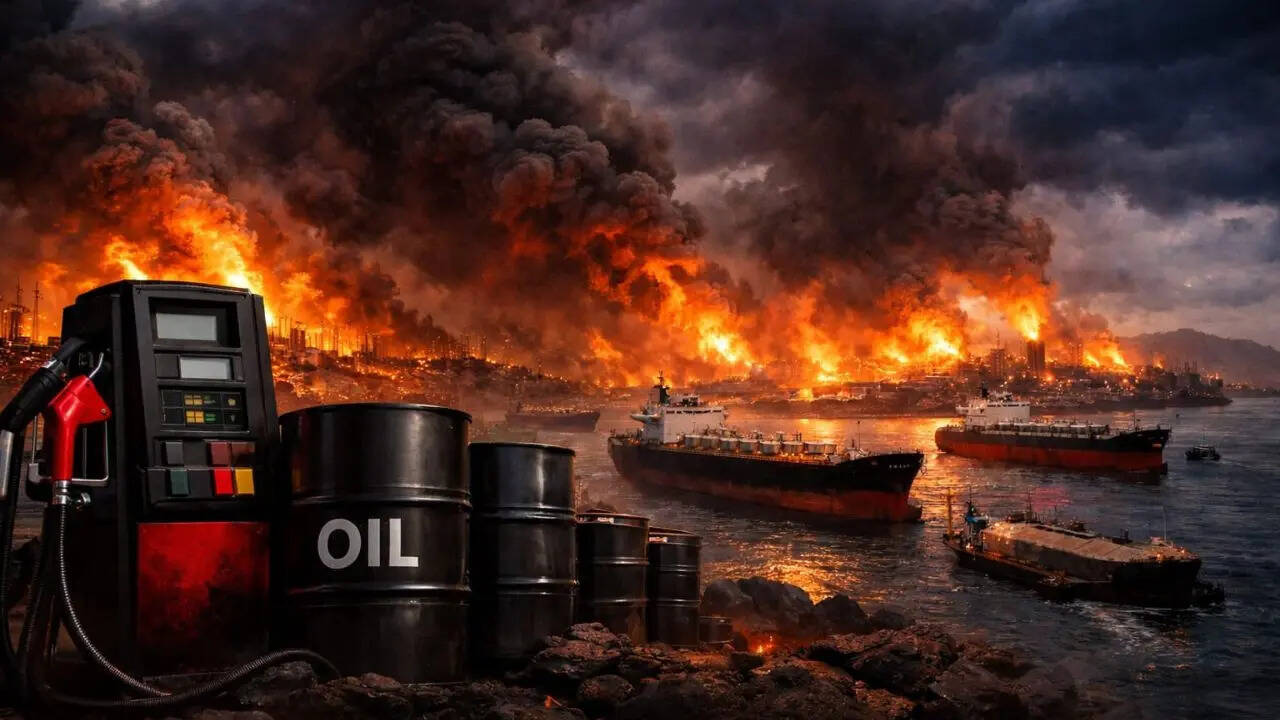
Oil Prices in US Explode Above $100 Amid Iran War and Strait of Hormuz Fears
