
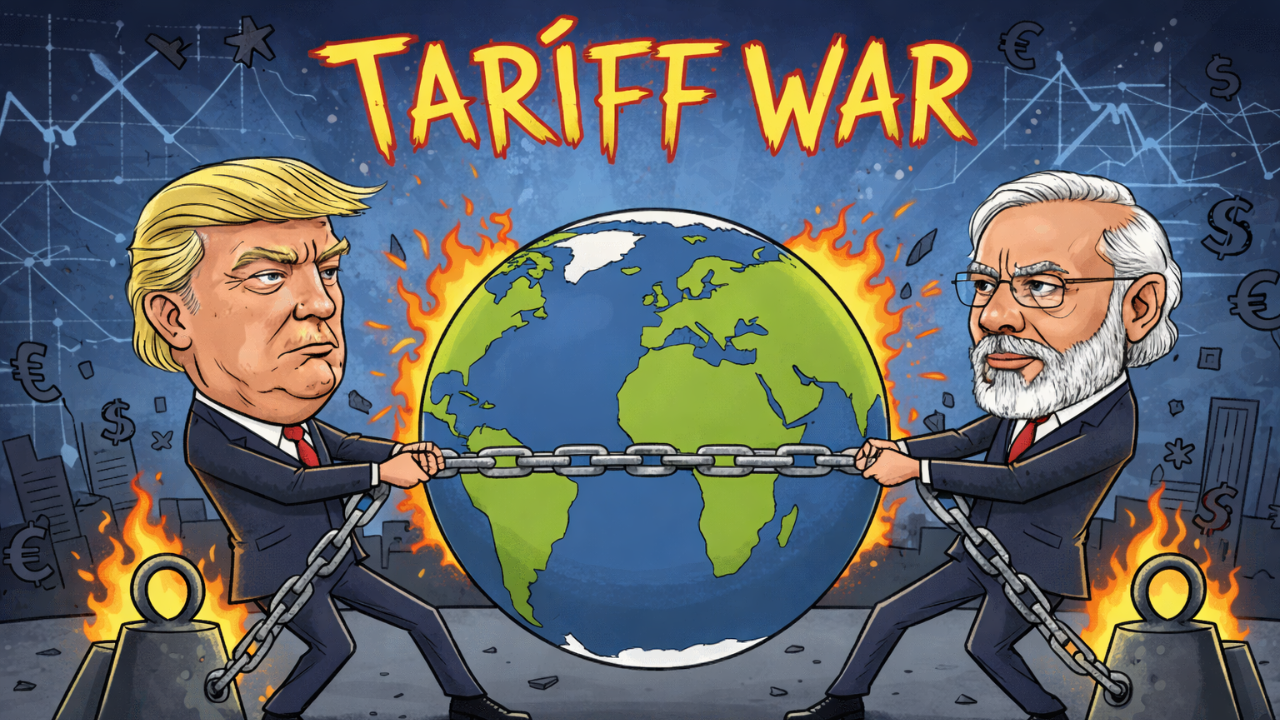
New Delhi: Hours after the US Supreme Court invalidated his global tariff framework, US President Donald Trump moved swiftly with a new executive order, imposing a 10% worldwide tariff under Section 122. For India, however, the math is not simple. While it is expected now that countries will pay 10% duties, Indian goods currently face an 18% reciprocal tariff under the interim trade deal signed just this month, which puts things under fresh scrutiny.
A White House official, when asked whether India will have to pay 10% tariffs and whether they will replace previous tariffs under the International Emergency Economic Powers Act (IEEPA), told ANI, “Yes, 10 per cent until another authority is invoked.”
However, at the same time, the official advised all trade partners to “abide by their trade deals”.
Based on the February 6 US-India agreement, the US applies an 18% reciprocal tariff on specific Indian goods. Clarity is expected on whether Trump’s new 10% global tariff under Section 122 is added on top, or if the rate is slashed to a uniform 10% for all nations, irrespective of the trade deals signed.
So far, as per a White House Fact Sheet, the tariff is expected to temporarily go down to 10% from 18%, but the new duty will impact Indian exports across key sectors. Pharmaceuticals and pharma ingredients from India are exempted, and certain electronics exports from India are likely to be excluded. Energy and critical mineral shipments are not subject to duty, and Indian textiles under CAFTA-DR rules remain unaffected.
USMCA-related exemptions are not applicable to India, and low-value shipments will face duty after de minimis suspension. The US has signaled further trade actions via Section 301, so changes may be expected.
What has Trump said?
Speaking to reporters on Friday, Trump has claimed “nothing changes” in the specifics, and the deal with India “remains on”.
On the specifics of the deal with India, Trump said, “Nothing changes. They’ll be paying tariffs, and we will not be paying tariffs. So deal with India is they pay tariffs. This is a reversal for what it used to be, as you know, India and I think Prime Minister Modi is a great gentleman, a great man, actually, but he was much smarter than the people that he was against in terms of the United States, he was ripping us off. So we made a deal with India.”
“It’s a fair deal now, and we are not paying tariffs to them, and they are paying tariffs. We did a little flip. The India deal is on…all the deals are on, we’re just going to do it (differently),” he added.
Also Read: Why US Supreme Court Struck Down Trump’s Sweeping Global Tariffs | EXPLAINED
What is Trump’s 10% order?
Trump has signed an executive order for a 10% global tariff under Section 122 of the Trade Act of 1974. This authority allows for a temporary import surcharge (up to 15%) for 150 days to address balance-of-payments deficits.
“Effective immediately, all the national security tariffs under Section 232 and existing Section 301 tariffs remain in place… Today, I will sign an order to impose a 10% global tariff under Section 122 over and above our normal tariffs already being charged,” he said.
This came after the Supreme Court’s 6-3 ruling that invalidated President Trump’s global tariffs, marking a significant setback for his economic strategy. The court emphasised that only Congress has the constitutional authority to impose taxes, including tariffs, countering Trump’s use of emergency powers to unilaterally impose sweeping “reciprocal” tariffs on nearly every other country.
The judges also found that the International Emergency Economic Powers Act (IEEPA) does not authorise the imposition of duties.
(With agency inputs)
