
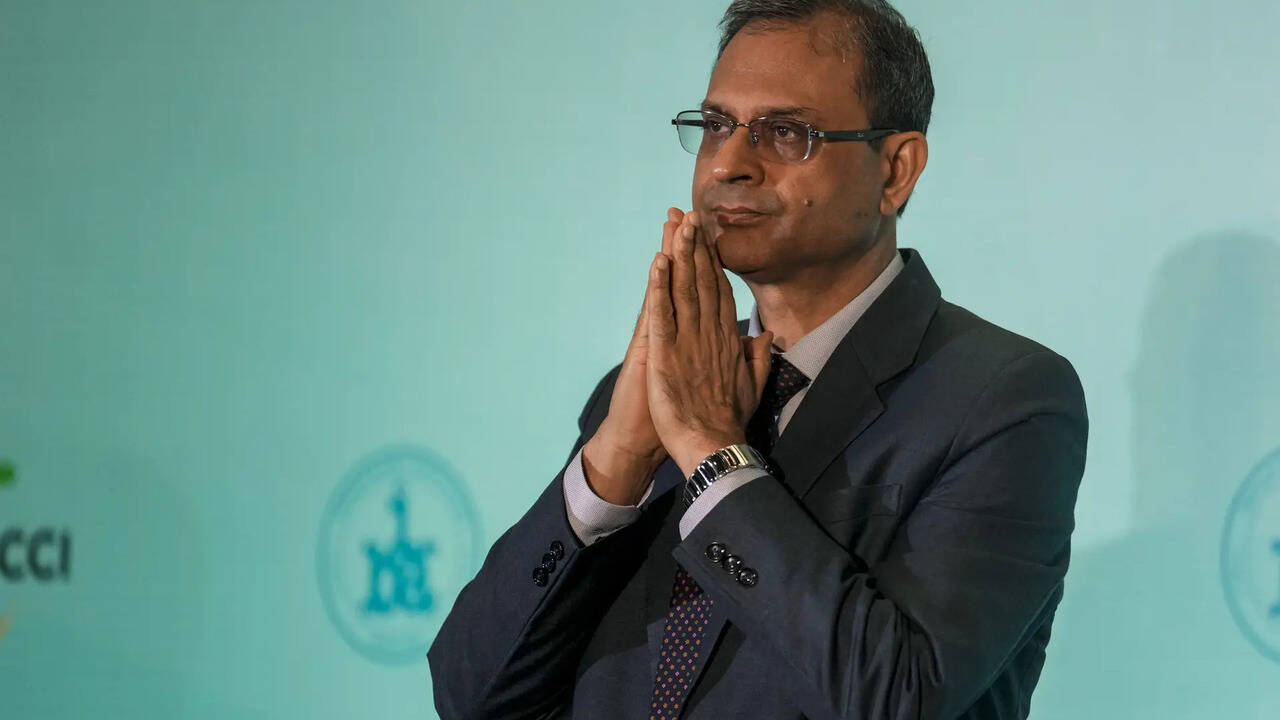
India’s central bank is expected to maintain its key policy rate in the upcoming Monetary Policy Committee (MPC) meeting scheduled from February 4 to 6. Economists also anticipate that the committee will hold onto a neutral stance, keeping monetary conditions stable. “With the new series on CPI and GDP to be released this month, where inflation and GDP growth could be higher than the present levels, it does look like the MPC will pause on rates,” said Madan Sabnavis, Chief Economist at Bank of Baroda.
The December policy saw the six-member MPC cut the repo rate by 25 basis points to 5.25 per cent, bringing the total rate reductions in 2025 to 125 basis points. Yes Bank noted, “The RBI cut the policy rate in December, when the MPC preferred to provide more weightage to inflation being below the lower bound of the Flexible Inflation Targeting (FIT) framework. With inflation likely to move higher (even in the new base year series to be published starting February 12), there is little reason for moving in with further cuts.”
A recent report added, “We think we have seen the last of the rate cuts in this cycle and should expect a long pause (difficult to determine the length of the pause), unless growth tends to underperform (not our base case).”
Deepak Aggarwal, Co-founder, Co-CEO, and CFO of Moneyboxx Finance Limited, said, “The upcoming RBI MPC meeting is expected to reinforce a status-quo approach on interest rates, allowing the central bank to assess the impact of recent fiscal measures. From an MSME and NBFC standpoint, the Union Budget has set the tone for growth, but its success will depend significantly on how monetary policy complements fiscal intent.”
He added, “While higher government borrowing may exert pressure on bond yields, it also underscores the importance of active liquidity management by the RBI to prevent crowding out of private credit. NBFCs play a crucial role in last-mile credit delivery to MSMEs, and stable liquidity conditions are essential to keep lending costs in check. We anticipate the RBI will maintain a balanced stance supporting growth while remaining vigilant on inflation so that MSMEs can continue to access credit with confidence and contribute meaningfully to economic expansion.”
RBI’s Focus On Liquidity Management
Gaura Sen Gupta, Chief Economist at IDFC FIRST Bank, said the central bank is likely to prioritise liquidity measures. Banking system liquidity has remained tight over recent months, with Net Demand and Time Liabilities (NDTL) below 1 per cent and dropping to ~0.2 per cent in January.
Sabnavis highlighted, “There will be a greater focus on liquidity management with an open market operation (OMO) calendar being announced and possibly a cash reserve ratio (CRR) cut invoked to infuse permanent liquidity.” Additionally, a Nuvama Research note added that the US-India trade deal could support foreign inflows and stabilise the rupee, giving the RBI room to manage domestic liquidity.
GDP, Inflation, And Lending Rates Outlook
Economists do not expect the RBI to revise its growth or inflation targets. In December, the central bank raised its FY26 GDP projection by 50 bps to 7.3 per cent from 6.8 per cent. Government estimates now place real GDP growth at 7.4 per cent for the fiscal year. CPI inflation for 2025-26 had been lowered to 2 per cent from 2.6 per cent.
If the repo rate remains unchanged, interest rates on loans and deposits linked to the repo rate will likely stay steady. However, banks may adjust rates tied to the marginal cost of fund-based lending rate (MCLR).
