
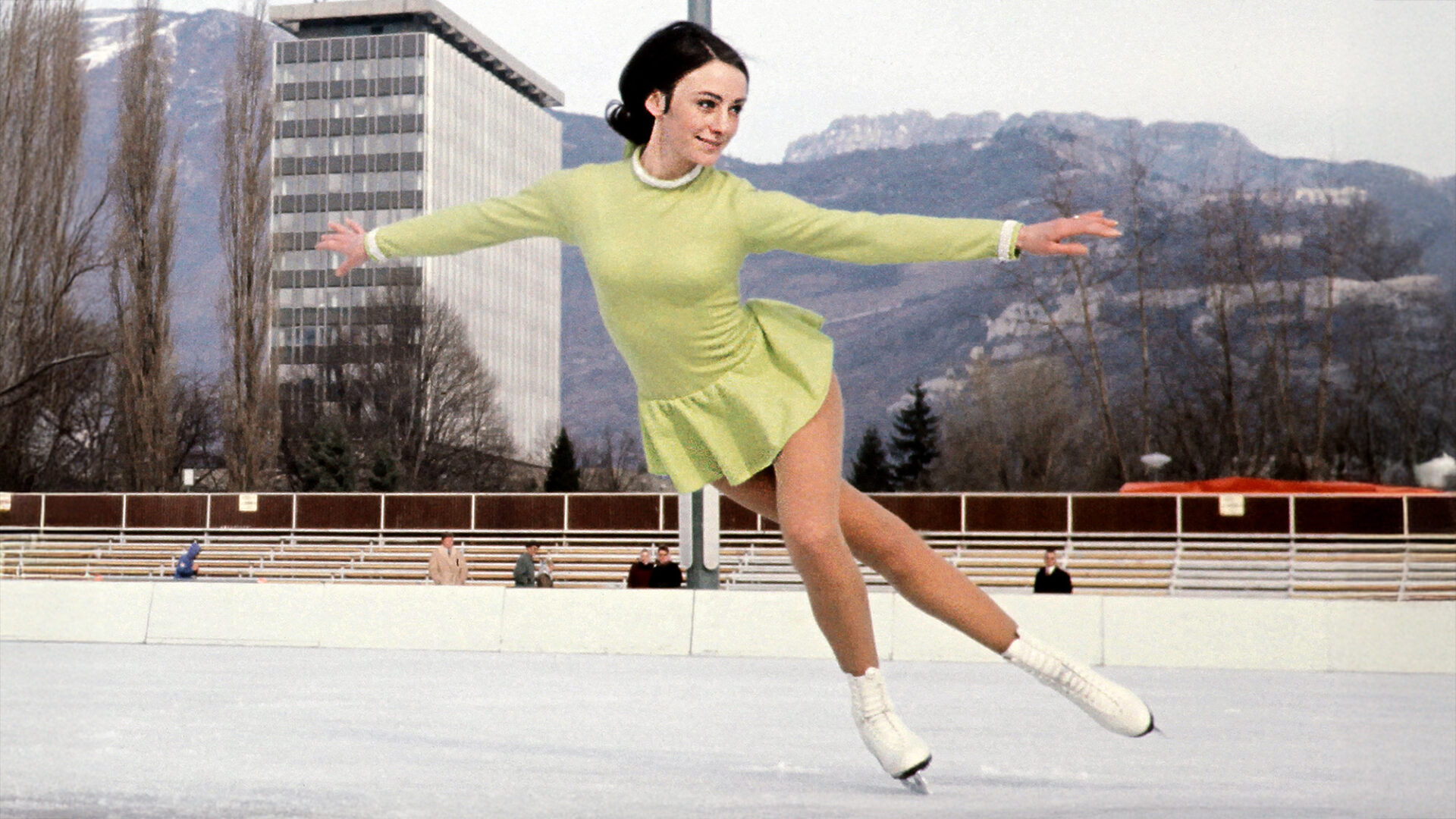
From figure skating to ice hockey, many of the most popular winter sports stem from a long history of people simply playing around on ice skates. Part of what makes a good skater so fun to watch is the juxtaposition of their clear technical skill and the seeming effortlessness with which they glide across the ice. They make it seem so natural. But if you step back and think about it, strapping what are in a sense thin knives to your feet and charging out onto a field of slick ice seems like an objectively wild thing to do. So when and why did humans first create ice skates? And how did they become a ubiquitous and beloved staple of winter fun?
These questions are surprisingly hard to answer, both because we don’t have a ton of archaeological or historical sources on early ice skates and because only a few researchers have explored them. Popular accounts of the history of ice skating are riddled with errors, Bev Thurber, one of the rare specialists in the field, tells Popular Science. And experts differ in their interpretations of the artifacts and accounts we do have.
But we know a few things about the evolution of ice skates with relative certainty. Such as the fact that the earliest ice skates weren’t made of sharpened metal, but instead of smooth bone.
Early ice skates were made of bone
Although pop histories often claim that ice skates emerged around 3,000 BCE in what is now Scandinavia, there’s actually no clear historical basis for that claim. In reality, no one is sure when the practice of ice skating emerged. The best we can say is that, over the course of the second millennium BCE peoples from Central Europe to the Eurasian step cut long bones from animals like sheep and cows to fit the size of their feet. These early innovators then drilled holes through the bones and threaded leather straps through them. They tied these simple devices to the bottom of their general-use footwear, and set off onto the ice.
Many historians assume that these ancient “bone skates” were utilitarian devices, used for fast transit along frozen rivers and lakes. In 2007, two biophysicists experimenting with replica bone skates concluded that they did require less energy expenditure than walking on the same ice.
A pair of Viking ice skates made from bone. They were strapped to feet and the skater propelled themselves with a pole. With the flat bottom, they were pretty much useless for figure skating. Image: Contributor / Star Tribune via Getty Images
However, Thurber, who made and experimented with her own bone skates, says they’re not the most practical mobility tools. For starters, they only work well on clear ice, which is not easy to find in nature. Even then, smooth and slick with residual fats and oils, the bones slide around too easily to allow people to simply push off with their feet alone. So users likely relied on sticks for propulsion. But even with sticks, Thurber says, “It’s almost impossible to stop or turn.”
“The evidence for practical use is pretty weak,” she argues. Instead, she thinks people mainly used them for fun. In 1180, William Fitzstephen, a former secretary to the murdered Archbishop of Canterbury Thomas Becket, recorded one of the earliest accounts in English of people using bone skates. He describes people using them to play on frozen marshes, rather than make their way to work.
The first metal skates
In the 13th century, craftspeople in what is now the Netherlands swapped out bone for strips of wood embedded with iron blades. These wood-and-iron skates were then likewise strapped to people’s shoes. No one’s sure why artisans made the shift. They may have been building on a prior innovation, since lost to history.
“There are a lot of unknowns surrounding the transition from bone to metal skates and the development of edge-pushing,” says Thurber.
Niko Mulder, another early skating expert, speculates that these early metal skates may have started out as a status symbol. But if that was the case initially, by the 1300s, even the common folk used them.
The rapid adoption of metal blades likely reflects the superior control and mobility they offered. While bones slide over clean ice, blades actually liquify the ice directly below them, creating a sort of track for the skate. The water fills imperfections in the ice, allowing for a smooth glide, and then freezes over again as the skate moves on. This meant not only a drastic increase in speed, but the development of techniques for propulsion without the aid of a stick and for making rapid, fluid turns—that is to say, the birth of ice skating as we know it.
These metal ice skates were made in the U.S. sometime between 1840 and 1859. Image: Heritage Images / Contributor / Getty Images Unknown
Over the next few centuries, craftspeople developed little improvements, like the addition of small spikes and later curves or wedges on the toe of a blade for added stability. But as metal skates spread across Europe and beyond, the basic design remained fairly consistent—likely because it was relatively cheap and efficient, and many people just wanted to use skates for idle fun.
Ice skates meet mass production
The next big jump in skate technology comes with the popularization of skating in England and America. Skates already had a long history in these countries, but clubs dedicated to skating emerged in the former in the 18th century and the latter in the 19th century. As Sean Maw, a sports engineer who works on speed skate design, points out, the early industrial revolution changed the way people saw and used their leisure time. Sports in particular grew more organized and specialized. And people were eager to apply new materials and mass manufacturing techniques to equipment.
As organized speed skating emerged, it created demand for longer, thinner blades that would spread a skater’s weight out so they wouldn’t cut as deep into the ice—and would allow for a longer push on each stride to build up momentum. As hockey professionalized, it created new demand for tweaks to blades that’d allow for fast stops and quick turns. And as figure skating evolved from competitions where contestants literally etched a set of designs into the ice into a balletic display involving jumps and spins, it created demand for the development of “toe picks,” the jagged tip you see on some ice skates that help with takeoff and landing.
This vintage photograph taken in February 1909 shows a group of ice skaters in Graz, Austria. Image: Public Domain
Dig around in 19th century patents, as Thurber has, and you’ll also find some wild ideas that never made it to production, like skates that convert into roller blades. However, you’ll also find spikes and clamps that allow for a more stable attachment between shoes and skates, and metal frames that slowly displaced wood slats.
Look at old skates from this period and you’ll also notice a ton of subtle adjustments to the curve of the bottom of the blade, which determines how long it stays in contact with the ice over the course of each stride, and to the grinding and etching of the metal’s edge. By the early 20th century, decades of experimentation and incremental adjustment gave birth to the activity-specific boots-with-built-in-skates most of us are familiar with.
Ice skates keep developing
Dedicated sports engineers and tinkerers alike continue to fine tune specialized skate designs. But biomechanics expert and skate designer Dustin Bruening tells Popular Science that “the most interesting thing about skate development over the past century is the lack of development.”
The last major change in design was the “clap skate,” developed through the 1970s and ‘80s and popularized among speed skaters in the ‘90s. These skates’ blades are not fully attached to their boots, with a hinge at the front allowing the heel to lift away and the metal edge to remain on the ice.
However, the idea for clap skates notably dates back to the 19th century, Maw points out, and just languished until an engineer finally found the right materials and design adjustments to make the concept work. Although some grumbled about the shift, speed skaters adopted this innovation because it gave users a clear acceleration advantage.
German speedskater Monique Angermüller wears clap skates while competing at the 2008 speedskating world cup in Heerenveen, the Netherlands. Image: McSmit / CC BY-SA 3.0
Other innovative designs, like a figure skate with a hinged ankle, which Bruening and his colleagues developed to better absorb the harsh impact of jumps, have struggled to gain traction. Bruening believes the market for specific skate types is just too small, the cost of development and rollout too high, and the cultural inertia too strong for some changes. But Maw points out that big innovations also run into resistance because, like the shift from bone to metal, they can alter the nature of skating.
“Claps changed who was a good speed skater,” he says. “They took away an emphasis on technique and instead emphasized power.” Clap skates are also more expensive than other skates, he adds, so they changed the calculus for getting into the sport.
None of this means skates have stopped evolving, Maw explains. Most modern innovation just focuses on fine-tuning materials and designs—and the prospect of developing bespoke blades for each athlete’s body. But Maw hopes that experimentation will also lead to the development of cheaper skates as well, so that more people get a chance to glide across a field of ice.
In The History of Every Thing, Popular Science uncovers the hidden stories and surprising origins behind the things we use every day.
Related ‘The History of Every Thing’ Stories
Ketchup was once a diarrhea cure
Pilates started in a WWI internment camp
How WWII made Hershey and Mars Halloween candy kings
Lip balm’s surprising history from earwax to Lip Smackers
How WWI and WWII revolutionized period products
The post From bones to steel: Why ice skates were a terrible idea that worked appeared first on Popular Science.
