
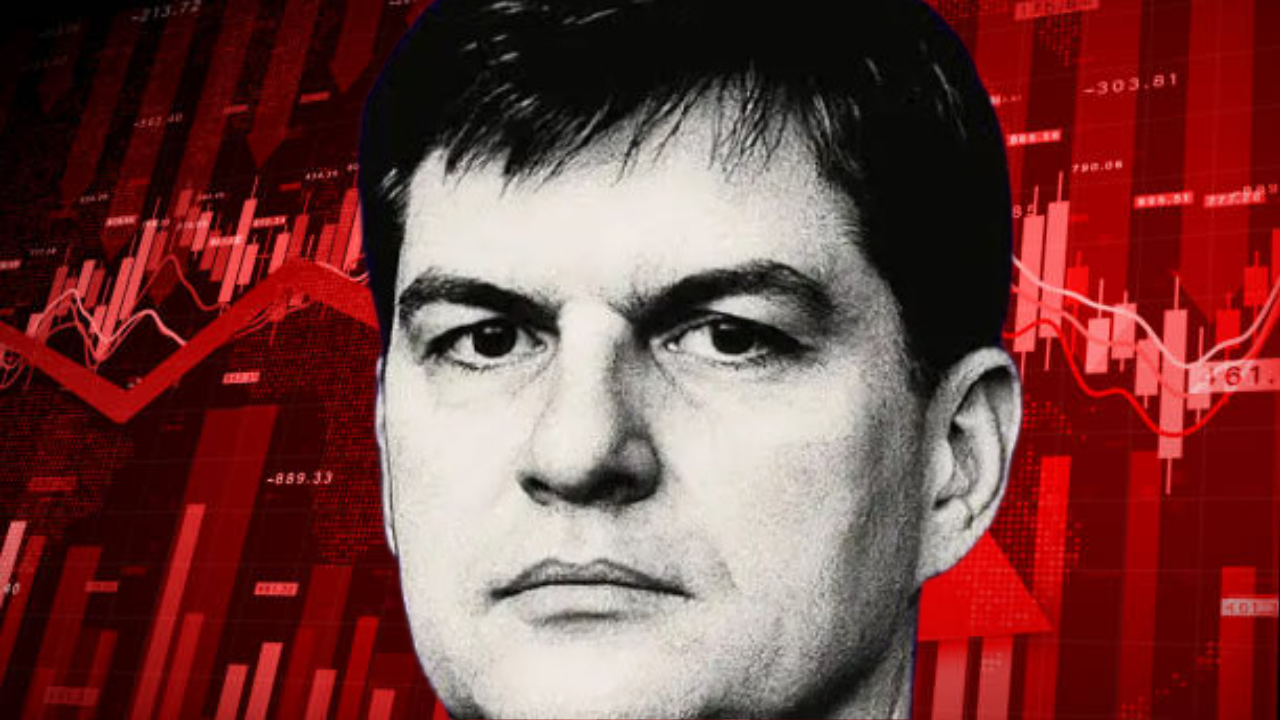
Dr. Michael James Burry, born on May 19, 1971, in San Jose, California, is an American investor and hedge fund manager renowned for his prescient prediction of the 2008 financial crisis. A former neurology resident turned value investor, Burry founded Scion Capital in 2000, which he later rebranded as Scion Asset Management. His deep dive into the U.S. housing market in the early 2000s led him to bet against subprime mortgages, yielding massive profits amid the global economic meltdown.
Immortalized by Christian Bale in the 2015 film The Big Short, Burry’s story exemplifies contrarian investing and meticulous research. Today, he continues to make bold moves, with his latest focus on water as a scarce commodity poised for value appreciation. This article explores Burry’s background, his foresight on the housing bubble, his path to wealth, and the rationale behind his water investments.
Early Life and Education
Michael Burry’s journey began with a unique blend of intellect and determination. Diagnosed with Asperger’s syndrome as an adult, which he credits for his intense focus, Burry grew up in a middle-class family. He earned a bachelor’s degree in economics and pre-med from the University of California, Los Angeles (UCLA), followed by an M.D. from Vanderbilt University School of Medicine. Burry then pursued a neurology residency at Stanford Hospital but left in 2000 to pursue his passion for investing full-time. His medical training honed his analytical skills, which he later applied to dissecting financial markets with surgical precision.
Burry’s early interest in stocks was sparked during medical school, where he began posting investment ideas on online forums under the pseudonym “Cassandra,” drawing from Greek mythology to symbolize his warnings of impending doom.
Entry into Investing and Founding Scion Capital
Burry’s foray into professional investing was unconventional. In 1996, while still in residency, he launched a value investing blog that attracted prominent followers, including noted hedge fund managers and institutional investors. Armed with a $1 million inheritance from his family, Burry founded Scion Capital LLC in 2000, focusing on undervalued stocks and deep fundamental analysis.
The fund’s name drew from The Scions of Shannara, a fantasy novel reflecting Burry’s eclectic interests. Early successes included shorting overvalued tech stocks during the dot-com bubble burst, which helped Scion deliver strong returns and grow its assets under management to around $600 million by 2004. Burry’s approach emphasized independent research, often ignoring Wall Street consensus, setting the stage for his most famous trade.
Predicting the Housing Bubble: A Deep Dive into Mortgages
By 2003, while most investors viewed the U.S. housing market as a safe haven, Burry began scrutinizing mortgage lending practices. He pored over thousands of pages of prospectuses for mortgage-backed securities (MBS), identifying systemic risks in subprime loans—high-interest mortgages issued to borrowers with poor credit.
Burry noticed teaser rates that would reset sharply higher after two to three years, shortening teaser periods, and increasingly lax underwriting standards such as no-documentation loans. He calculated that rising interest rates and stagnating home prices would trigger widespread defaults, collapsing the value of MBS. Predicting the bubble’s burst years in advance, Burry stood largely alone as regulators and economists dismissed the sector’s vulnerabilities.
His analysis revealed how Wall Street’s securitization of risky loans created a false sense of security, with ratings agencies assigning top ratings to deeply flawed assets.
The Big Short: Betting Against Subprime Mortgages
To capitalize on his insights, Burry persuaded major banks to create custom credit default swaps on subprime mortgage bonds in 2005—an innovative financial instrument that functioned as insurance against bond defaults. Scion committed roughly $1 billion to these swaps, paying premiums while waiting for the housing market to crack.
As housing prices continued to rise through 2006, investors grew impatient and pressured Burry to exit the trade. He responded by restricting withdrawals to protect the strategy. When mortgage defaults surged in 2007 and the financial system unraveled in 2008, the swaps paid off spectacularly.
This “big short” not only validated Burry’s thesis but also exposed deep structural flaws in the global financial system, later chronicled in Michael Lewis’s book The Big Short and its film adaptation.
Profits, Wealth, and the Aftermath
Burry’s bet generated extraordinary returns. Scion Capital earned roughly $700 million for investors and about $100 million for Burry personally, delivering a net return of nearly 489% between 2000 and 2008. Overall, he profited close to $800 million from the housing collapse.
Following the crisis, Burry shut down Scion Capital in 2008 and returned capital to investors. He later reopened the firm in 2013 as Scion Asset Management, focusing on value investing and macroeconomic opportunities. His success drew both admiration and scrutiny, including regulatory investigations that were eventually closed without action.
Post-2008 Career and Continued Predictions
Since the crisis, Burry has remained an active and often controversial market voice. He has repeatedly warned of asset bubbles, inflation risks, and systemic fragility, occasionally sharing views on social media before deleting his accounts. He has taken high-profile bearish positions against popular stocks and sectors, including electric vehicles and artificial intelligence, while maintaining a reputation for reclusiveness and data-driven conviction.
Scion’s portfolio, managing over a billion dollars in assets, reflects Burry’s continued preference for concentrated, contrarian bets in undervalued or misunderstood areas of the market.
The Water Bet: Why Water Is Burry’s Next Big Investment
After the housing crisis, Burry shifted his attention to what he considers the most critical scarce resource of the future: water. Beginning around 2010, he invested heavily in farmland with secure water rights, particularly in water-rich regions. Rather than trading water directly, his strategy focuses on agriculture—growing crops in water-abundant areas and exporting them to water-stressed regions.
Burry has argued that “food is the way to invest in water,” emphasizing that population growth, climate change, inefficient irrigation, and urban overuse will drive water scarcity worldwide. Regions such as California, India, and the Middle East already face acute stress, making water-intensive agricultural products increasingly valuable over time.
Despite short-term challenges, Burry continues to view water as a long-term, asymmetric investment with the potential to rival the magnitude of his earlier success.
Dr. Michael Burry’s career underscores the power of disciplined, independent analysis in identifying hidden risks and opportunities. From anticipating the 2008 housing collapse through exhaustive research to reshaping modern contrarian investing, Burry has repeatedly challenged consensus thinking. His pivot toward water reflects a forward-looking bet on sustainability amid mounting global resource pressures. Whether or not his water thesis ultimately matches the scale of his historic short, Burry’s track record suggests that patience, conviction, and a willingness to stand alone remain his defining traits.
